Best Live Sonar for BC Interior Lakes (2026): LiveScope vs MEGA Live 2 vs ActiveTarget 2 for Stillwater Trout
Fishing the lakes around 100 Mile House, Williams Lake and the broader Cariboo Chilcotin means dealing with a wide variety of lake types, fishing conditions and techniques. Traditional depth sounders help, but forward-facing live sonar changes everything. You literally watch fish approach your chironomid or leech, see if they’re turning away, or know instantly if fish are even in the area.
Heads up: some links below are affiliate links. As an Amazon Associate I earn from qualifying purchases. It costs you nothing extra and helps keep the site and channel going. Thanks!
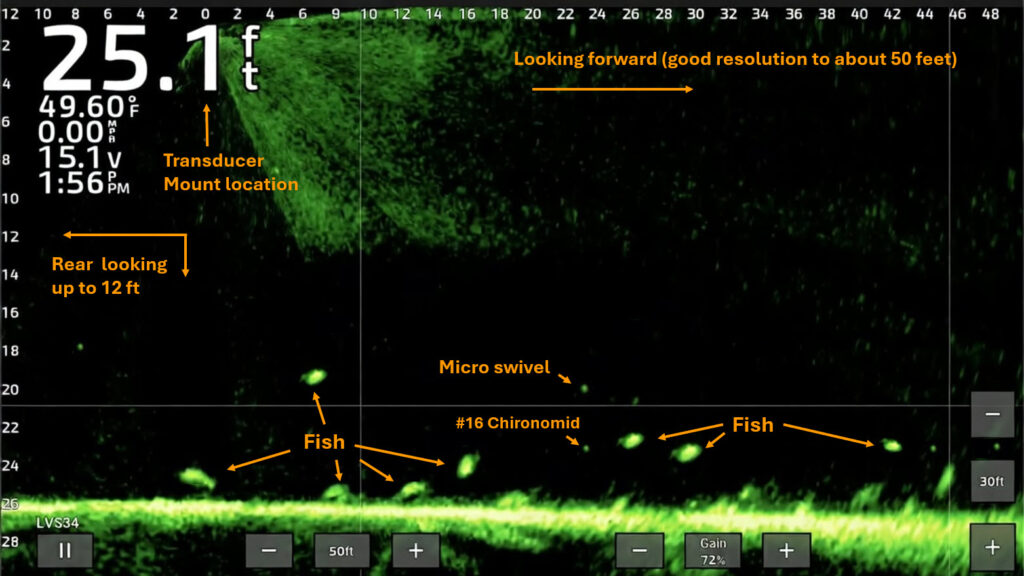
The guessing of whether you’re in the “right spot” or if you’ve got the right fly or depth is significantly reduced! For those fishing “trophy lakes” where densities are low but fish are huge, having a live scope can be the difference between 0–1 fish days and getting a few or more.
For BC Interior anglers, the big three (Garmin LiveScope, Humminbird MEGA Live 2 and Lowrance ActiveTarget 2) all work well on lakes in this region. I’ve run them on local waters and break it down here so you can pick what fits your boat and your setup without the guesswork.
↓ Side-by-side comparison and my picks below.
Quick answer
Best live sonar for BC Interior lakes
- Best overall: Garmin LiveScope Plus. The clarity wins on our waters.
- Already running Humminbird: MEGA Live 2.
- Best value: Lowrance ActiveTarget 2, and it does well on deeper structure.
- Check your screen first. Transducer and head unit have to match by brand and model.
- Mounting: trolling motor shaft is easiest, and pole mounts are popular too. See my pole and mount guide.
What live sonar brings to BC Interior lakes
Real-time views ahead of or below your trolling motor let you:
- Locate rainbows in shallows or drop-offs, or suspended/cruising trout up to 80 ft. Excellent for shallower lakes like Simon or Fawn, to mid-depth lakes like Valentine, Sheridan or Forrest.
- Track how trout react to your suspended chironomid or leech, or your stripped nymph (do they inspect and spook, or commit?). On indicator setups you can even see your chironomid, micro swivel and split shot!
- Spot trout (or other target species) holding tight to drop-offs, weeds or sunken logs before casting.
- Scout structure in murkier shallows or deeper Cariboo spots without blind searching.
Live sonar works great alongside your standard 2D/CHIRP sonar (the classic down-view for mapping the lake bottom contours and depth). It shines brightest when mounted on your trolling motor for precise aiming and control on these lakes.
Head unit vs transducer: don’t get this wrong
Transducer = the underwater scanner (typically mounted on your trolling motor), though pole mounts are gaining in popularity.
Head unit = your screen (processes and displays the live feed).
They must match brands and models, no mixing. Garmin usually needs a GLS 10 black box, Humminbird plugs in direct, and Lowrance’s black box is included in most kits. Check your current screen first to avoid extra costs.
Garmin LiveScope vs Humminbird MEGA Live 2 vs Lowrance ActiveTarget 2 for stillwater
| System | What you need | Views | Where it shines for me |
|---|---|---|---|
| Garmin LiveScope Plus (LVS34) | GLS 10 black box (in the system) and a compatible Garmin ECHOMAP or GPSMAP screen | Forward, Down, Perspective | Crisp images and target separation in weeds or near bottom |
| Humminbird MEGA Live 2 | A Humminbird APEX, SOLIX G3 or XPLORE screen. No extra black box | Forward, Down, Landscape | Suspended fish and longer views, simple setup |
| Lowrance ActiveTarget 2 | A compatible Lowrance screen such as HDS PRO, HDS LIVE or Elite FS. Module comes in the kit | Forward, Down, Scout | Value, and deeper structure |
Garmin LiveScope (Plus / XR)
Top pick for most Cariboo anglers. Crisp images, great target separation in weeds or near bottom, and low clutter. The Plus (LVS34) covers typical BC lake ranges perfectly, and the XR adds extra reach for bigger or deeper waters.
Pros: Best detail for seeing individual rainbows and exactly how they react to your presentation.
See the Garmin LiveScope Plus system (with GLS 10 black box) on Amazon
Humminbird MEGA Live 2
Strong performer for suspended fish and longer views. No extra black box needed if you have an APEX, SOLIX G3 or XPLORE unit. Integrates seamlessly if you’re already in the Humminbird ecosystem.
Pros: Simple setup and good performance in variable BC water clarity.
See the Humminbird MEGA Live 2 transducer on Amazon
Lowrance ActiveTarget 2
Solid value option that excels in deeper structure (deepwater rainbows, kokanee, lake trout). Great if you already run Lowrance screens.
Pros: Affordable entry point with wide coverage.
See the Lowrance ActiveTarget 2 kit (module included) on Amazon
My experience on Cariboo lakes
I’ve spent thousands of hours on waters around Princeton, Merritt, Kamloops, 100 Mile House and Williams Lake chasing rainbows, brook trout and kokanee. Live sonar has been a total game-changer. It makes all the difference when starting on a new lake, on those tough days when fish are hard to find, or when hunting trophy trout. The ability to tweak your presentation and depth in real time, and actually see what’s going on, is simply unmatched.
Choosing for your BC setup
- Already own a head unit? Verify compatibility first, it can save you a big chunk of money.
- Buying new? Go with a 9–12″ screen for the clearest live views.
- Recommended screens:
- Garmin: ECHOMAP UHD2 9-inch
- Humminbird: XPLORE series
- Lowrance: HDS PRO, HDS LIVE, or the Elite FS series
- Mount: Trolling motor shaft is most common and easiest. Pole mounts are also popular for independent control, and I cover them in my live sonar pole and mount guide for small boats.
- Budget: The live sonar piece is the big expense, and a full setup with a screen costs quite a bit more. Compare current prices on the listings.
My recommendations
- Best overall for BC Interior lakes: Garmin LiveScope Plus. The clarity wins on our waters.
- If you’re already in the Humminbird ecosystem: MEGA Live 2.
- Best value pick: Lowrance ActiveTarget 2.
The buttons on this page go to Amazon. If you’re in Canada, Amazon may send you over to the Canadian store, and stock and shipping can differ. Click the links for the latest prices and real reviews from other Canadian and US anglers.
Gear I’d look at
Live sonar and screens
Garmin LiveScope Plus system
Humminbird MEGA Live 2
Lowrance ActiveTarget 2 kit
Garmin ECHOMAP UHD2 9 inch
Humminbird XPLORE
Lowrance Elite FS
FAQ
Is live sonar worth it for trout on BC Interior lakes?
For me, yeah, it has been. Forward-facing live sonar lets you literally watch trout come up to your chironomid or leech, see whether they inspect and spook or commit, and know instantly if fish are even in the area. On trophy lakes, where fish are few but big, that can be the difference between a 0 to 1 fish day and a few fish or more.
LiveScope vs ActiveTarget: which is better for stillwater trout?
On the waters I fish, Garmin LiveScope Plus wins on clarity. It has great target separation in weeds or near bottom, and it’s the best for seeing individual rainbows and how they react to your presentation. Lowrance ActiveTarget 2 is the value pick and does well on deeper structure, so it’s a good choice for deepwater rainbows, kokanee and lake trout, especially if you already run Lowrance screens.
Do I need a separate screen for live sonar?
Yes. The transducer is the underwater scanner and the head unit is the screen that shows the live feed, and they have to match by brand and model. Garmin usually needs a GLS 10 black box plus a compatible Garmin screen. Humminbird plugs straight into an APEX, SOLIX G3 or XPLORE with no extra box. Lowrance’s black box is included in most kits. Check your current screen first so you don’t buy something you can’t use.
Can you really see your chironomid on live sonar?
On indicator setups you can. With LiveScope I could see my #16 chironomid, the micro swivel and the split shot, and the fish reacting to them at 22 feet. The forward view gives excellent resolution out to about 50 feet.
Where do I mount the transducer on a small boat?
A trolling motor shaft is the most common and easiest mount. Pole mounts are also popular if you want to aim and stow the transducer on its own, especially on small boats and prams. I wrote up the poles and mounts I use in my live sonar pole and mount guide.
I already own a screen. What should I check before buying?
Verify that your head unit is compatible with the live sonar you want before you order. It can save you a big chunk of money compared with buying a whole new system. If you are buying a new screen, I’d go with a 9 to 12 inch one for the clearest live views.
Final thoughts
Live sonar takes a bit of time to get familiar with, but on BC Interior lakes it quickly pays off with more hookups. Mount it right, spend a few afternoons learning the modes, and you’ll see why it’s worth every penny.
Tight lines in the Interior!
If it helped, please subscribe to my YouTube channel. Your support is appreciated. Cheers!
More from my stillwater trout fishing
- Best live sonar poles and mounts for BC stillwater trout: the pole and Scotty mount setup I run on prams and small boats